Free on Mac, Windows, and Linux. Your agent’s costs are separate.
Read the prompt
Set up Tesseract by Mirage so you can create editable designs, edit videos, and make motion graphics in this agent’s environment. Read https://github.com/mirage-hq/Tesseract and check the requirements for this local or hosted environment. If it is supported, follow the official plugin or skills installation guide, use its required runtime version, verify the download checksum, and confirm a short preview renders correctly. Then ask what I want to make and which brand references or source assets I have. Keep the editable project and source assets with the finished render.
Captions Direct ad
Original videoRecreated with Tesseract
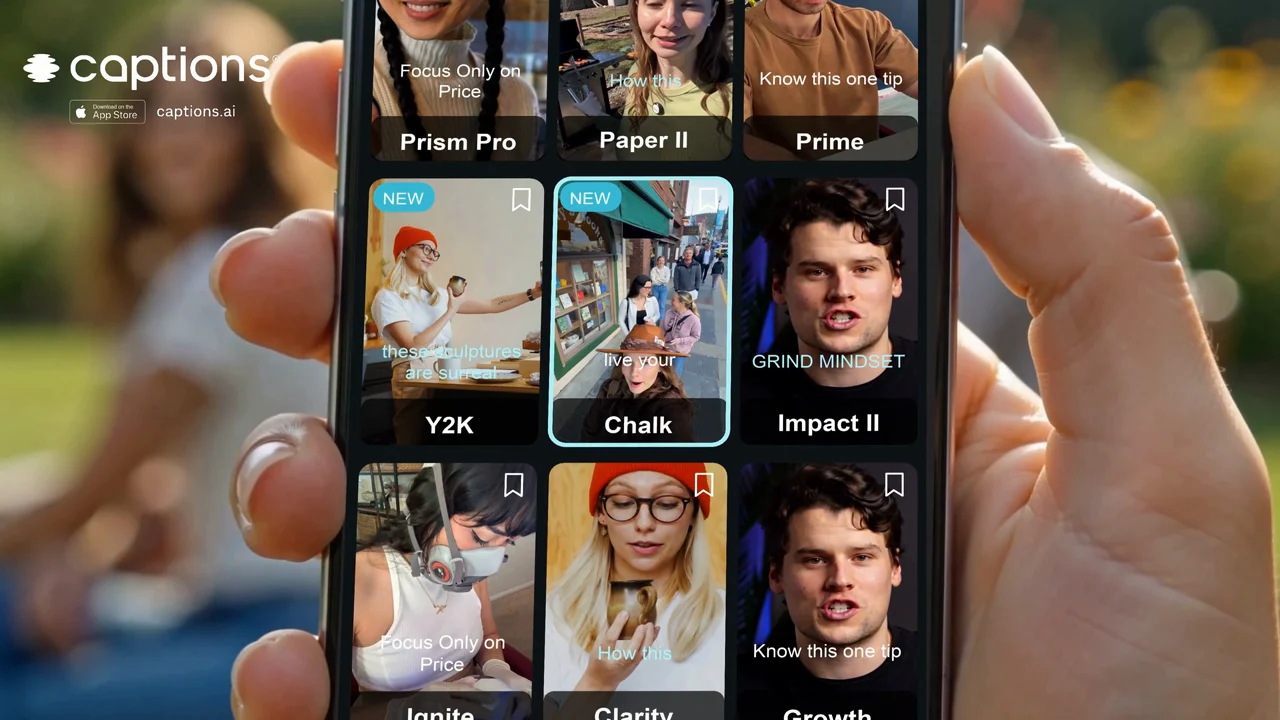
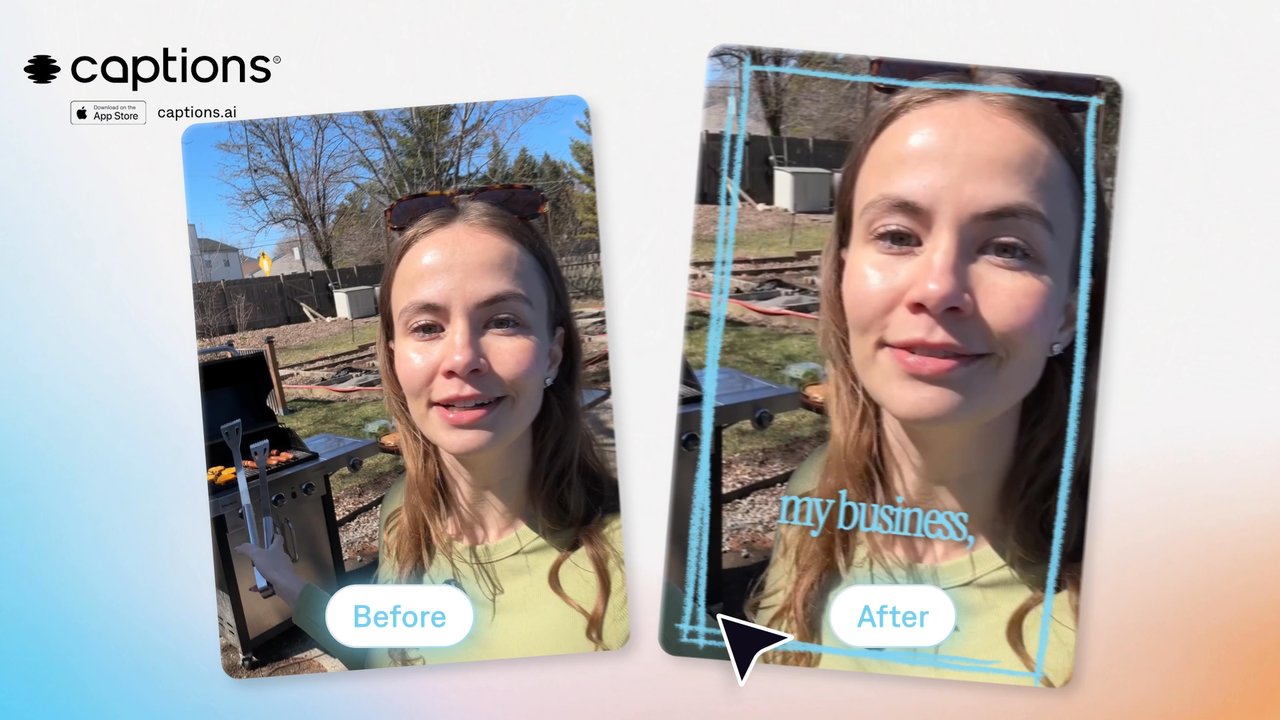
Animated before-and-after cards, a moving phone interface, a style picker, and a finished-video
carousel. Compare the original with the new Tesseract render.
Captions Narrative ad
Original videoRecreated with Tesseract
A business owner’s story, animated headlines, phone interfaces, and a final brand reveal. Motion
graphics and interfaces were rebuilt in Tesseract. Footage was generated separately with H3 Max,
and the original soundtrack was reused.
The result goes far beyond a finished video.
The Direct ad is a connected project: 13 visual compositions, nested graphics, moving phone
interfaces, and audio. Each part can be revised.
Direct ad / editable project
0 seconds → 15 seconds · Composition timing from the actual project
0s2s4s6s8s10s12s14s
Opening / Generate edit
Type
Before & after / presenter
Type
Before & after / food
Type
Before & after / friends
Type
Captions wordmark reveal
Type
Choose an editing style
79 objects
Four-stage editing progress
UI + footage
Phone / counter
Phone / bench
Phone / desk
Phone / workshop
Finished-video carousel
Composited layers
Captions brand finish
Composited layers
Original soundtrack
Illustrated from the actual Tesseract project. Nested layers are collapsed to show the full
sequence.
Even the phone screen is built from layers.
The style picker contains editable labels, video thumbnails, a selection outline, masks, and
animated scrolling. It is composited into the moving phone shot.
27 text layers. 13 video layers. 79 objects in total, including six groups.
Phone screen / expanded layers
Choose an editing style · 4.33–6.21s
▾Phone screen design
▾Editable interface artwork
▾Scrollable style gallery
◇Selected Chalk style outline
TChalk
Tlive your
▧direct-friends
27 text layers · 13 video layers · 79 objects
Gallery scroll
4.33s6.21s
Selection opacity
4.33s6.21s
Selected layers and animation control points from the actual style-picker composition. The 79
objects include six groups.
Change one detail
Change the selected style to my brand colors. Keep the phone movement and the rest of the sequence.
Try recreating this ad.
Download the Direct ad, attach it to your agent with Tesseract installed, and paste this
prompt. Review the first render together, then refine the details.
Attach the reference and give your agent a clear brief. Review each render and refine the
details together.
Recreate the Captions Direct ad
Recreate the attached 15-second Captions Direct ad in Tesseract as a new editable project. Match the shot order, pacing, layouts, typography, colors, and transitions.
Rebuild the before-and-after cards, moving phone interface, style picker, progress messages, video carousel, and end card with native editable layers. Keep the text, graphics, masks, and motion editable.
Use the media I provide and keep the reference soundtrack. If footage is missing, identify the shots needed and use my connected video-generation tools after we agree on a budget.
Compare rendered frames and transitions with the reference, refine the differences, and deliver the final video plus the editable Tesseract project.
For another video, attach your own reference and replace the ad name and scene list in the
prompt.
A starting point for work you already need to make.
Follow a trend with your own content.
Recreate the rhythm, animated type, or visual treatment that caught your eye. Use your own story and footage.
Rebuild a project when only the export remains.
Turn the surviving video into a new editable starting point, so you can update the message, branding, or timing.
Adapt the ideas behind a competitor’s ad.
Use its hook, pacing, or product demonstration as a reference. Build your version around your brand and offer.
Turn a reference into a repeatable campaign.
Keep the reconstructed compositions. Swap the message and media to create the next variation.
Adobe project conversion
Keep editing in Premiere Pro or After Effects.
After rebuilding a video in Tesseract, you can ask your agent to convert the new project for Adobe. If you still have the original Adobe project, try importing it directly instead of recreating it from a video.
Support is partial; After Effects export is experimental. See what transfers.
A few useful details.
Can I turn an MP4 into an editable video project?
Give your agent the MP4 and ask it to reconstruct the edit in Tesseract. It can rebuild text, graphics, layouts, motion, and timing as editable elements, using supplied or separately generated media for the footage.
Does this recover the original project file?
It creates a new Tesseract project from what is visible in the finished video. The original application’s layers, hidden elements, and effects settings are not stored in an MP4 and are not recovered.
How closely can it match the reference?
The two Captions ads above show the results. Their sequence, typography, layouts, and motion were reconstructed and refined against the originals. Generated footage and some interface details differ; the page lets you compare the actual videos.
Can I use a competitor’s ad as inspiration?
Use the reference to explain the opening, pacing, layout, or product story you want to explore. Ask the agent to apply those ideas to your own brand, message, and media so the result becomes your campaign.
What stays editable afterward?
The elements rebuilt in Tesseract remain editable: text, cards, layers, compositions, motion, and audio placement. Recorded or generated footage remains media inside the project; objects within that footage do not automatically become separate layers.
Do I need all the original assets?
The reference video is the starting point. Original footage, fonts, logos, and audio help the agent match it more closely. If those are unavailable, supply replacements or connect a separate media-generation tool.
Does Tesseract generate the replacement footage?
Tesseract edits and composites media. In these examples, H3 Max generated footage separately, while Tesseract rebuilt the graphics, interfaces, and motion. The supplied soundtrack was reused. External generation is separate from the free local engine.
How do I try this with my agent?
Install Tesseract in a supported local agent environment on macOS, Windows, or Linux. Provide a reference video and describe what to match or change. Review the first reconstruction, refine it, and render locally. Agent and external-generation costs are separate.
Around your next video
Create the designs that go with it.
Use your brand kit to make editable thumbnails, covers, and social graphics. Adapt the layouts for each placement.
Set up Tesseract by Mirage so you can create editable designs, edit videos, and make motion graphics in this agent’s environment. Read https://github.com/mirage-hq/Tesseract and check the requirements for this local or hosted environment. If it is supported, follow the official plugin or skills installation guide, use its required runtime version, verify the download checksum, and confirm a short preview renders correctly. Then ask what I want to make and which brand references or source assets I have. Keep the editable project and source assets with the finished render.