

Tips for great UGC
Learn what UGC is and how authentic storytelling can boost engagement and trust.

User-generated content (UGC) helps build trust through authenticity. It’s a top marketing format for a reason: people connect to genuine, relatable storytelling.
UGC is especially effective as video, because it shares more of the creator’s personality. With compelling voiceovers and animated speakers, UGC videos can help you connect in totally new ways. Whether it’s an unfiltered product review or a behind-the-scenes TikTok, UGC video feels organic in a way traditional advertising just can’t replicate.
While it may seem effortless, there’s a strategy behind great UGC. In this guide, we’ll break down what UGC-style video is, why it works, and how to use UGC to your advantage.
What is user-generated content?
UGC stands for any form of content created by customers or influencers to share their opinion. It’s typically unscripted and based on honest feedback, so it can feel more authentic than traditional advertising.
UGC can take many forms, from blog posts to videos. It’s typically shared on social media to help amplify its reach. There’s some overlap with influencer marketing, but UGC isn’t always sponsored by a brand or endorsed by one. We’re going to focus on UGC-style video in this post, since it’s our core content format at Mirage.
The most common types of UGC videos
There are two types of UCG videos: Organic and paid. Sometimes shoppers or creators make organic UGC to celebrate products or brands they like, simply to share their perspective. Brands may choose to amplify this content on their own channels, turning that organic content into a paid ad. Paid UGC can also be commissioned directly, with brands requesting and paying for specific types of content. These paid partnerships are tailored to meet brand needs and are usually shared directly on the company’s social media channels rather than the creator’s.
With UGC, you always want videos to feel credible and engaging. Here are some top formats created with Captions and Mirage Studio:
Product reviews
UGC product reviews break down a product’s features and showcase its pros or cons. They typically feature honest opinions, which boosts the review’s authenticity, so it’s best to include at least one or two neutral points. This type of UGC drives engagement because it reveals people’s genuine thoughts about something, which audiences are likely to care about.
“How I Use It” Tutorials
Tutorials put your products into relatable scenarios, letting your audience imagine using it themselves. They focus on a specific application, rather than a rundown of product pros and cons. For example, a creator might showcase a facial cleanser by filming their morning skincare routine.
Testimonial clips
Testimonials are straightforward product or service endorsements that focus on positive experiences and solid results. They’re broader than reviews, and more focused on a general recommendation rather than the details. They’re helpful for ad campaigns and website landing pages, showing happy customers in a short, easy-to-digest format.
Before-and-after videos
Before-and-after content emphasizes results and impact. They show tangible transformation and real-life outcomes. They’re often visual changes, like detergent treating a stain or face cream removing blemishes, but can also display performance improvements, like a sales team increasing efficiency with a CRM.

Standout UGC examples
UGC campaigns can make a lasting impact. Here are some standout examples that incorporated brands in an authentic way, rather than feeling like a polished ad.
Emma Chamberlain and Louis Vuitton
Influencer Emma Chamberlain worked with Louis Vuitton, sharing her experience with the brand in her own style on Instagram and YouTube. In one Harper’s BAZAAR video, Emma takes viewers on a day in Paris, showcasing coffee runs, exploring museums, and attending a fashion show. The campaign connected with people because it felt more like an authentic experience than a typical advertisement.
Zach King and Coca-Cola
Zach King’s collaboration with Coca-Cola is another strong example of UGC done right. Known for his creative, magic-infused short-form posts, Zach incorporated Coca-Cola products into his signature style using clever visual tricks and storytelling.
In one video, he made it look like paintings came to life and handed him a bottle of Coca-Cola, blending a bit of surprise and fantasy into the ad. His ability to weave the product into entertaining scenarios made the campaign feel natural while showcasing the company in a fun, memorable way.
How AI is changing UGC content
Traditionally, brands have worked directly with influencers to produce this kind of content. Now, AI is reshaping what UGC campaigns can look like. There are several reasons more companies are choosing to use AI UGC marketing:
Faster production
When you find creators you like partnering with, AI tools make it faster to scale. You can generate more videos with your favorite creators, without having to hold expensive shoots or spend time on post-production. Instead, partner with the creator to create a range of scripts based on their feedback and product experience. Then, use products like Mirage Studio’s video generator to quickly create new content. You can even swap outfits, locations and product placement within Mirage Studio so your creator has creative control for different storylines and scenarios.
Easier testing
AI UGC marketing helps your output grow while keeping production quality high. It’s quicker to test different hooks, new ideas and multiple videos across platforms or advertising channels. No matter how many videos you create, you can maintain a high-quality of production value, consistent lighting, etc. It’s easier to innovate and see if new styles or stories work for you.
Showcase more types of customers
If you get a lot of customer feedback but struggle to make content from it, AI avatars or twins can help. Use tools like the Captions app to turn real customers’ photos into talking head videos. This helps you scale more customer perspectives and customer segments into UGC-style content, without the traditional video production budget.
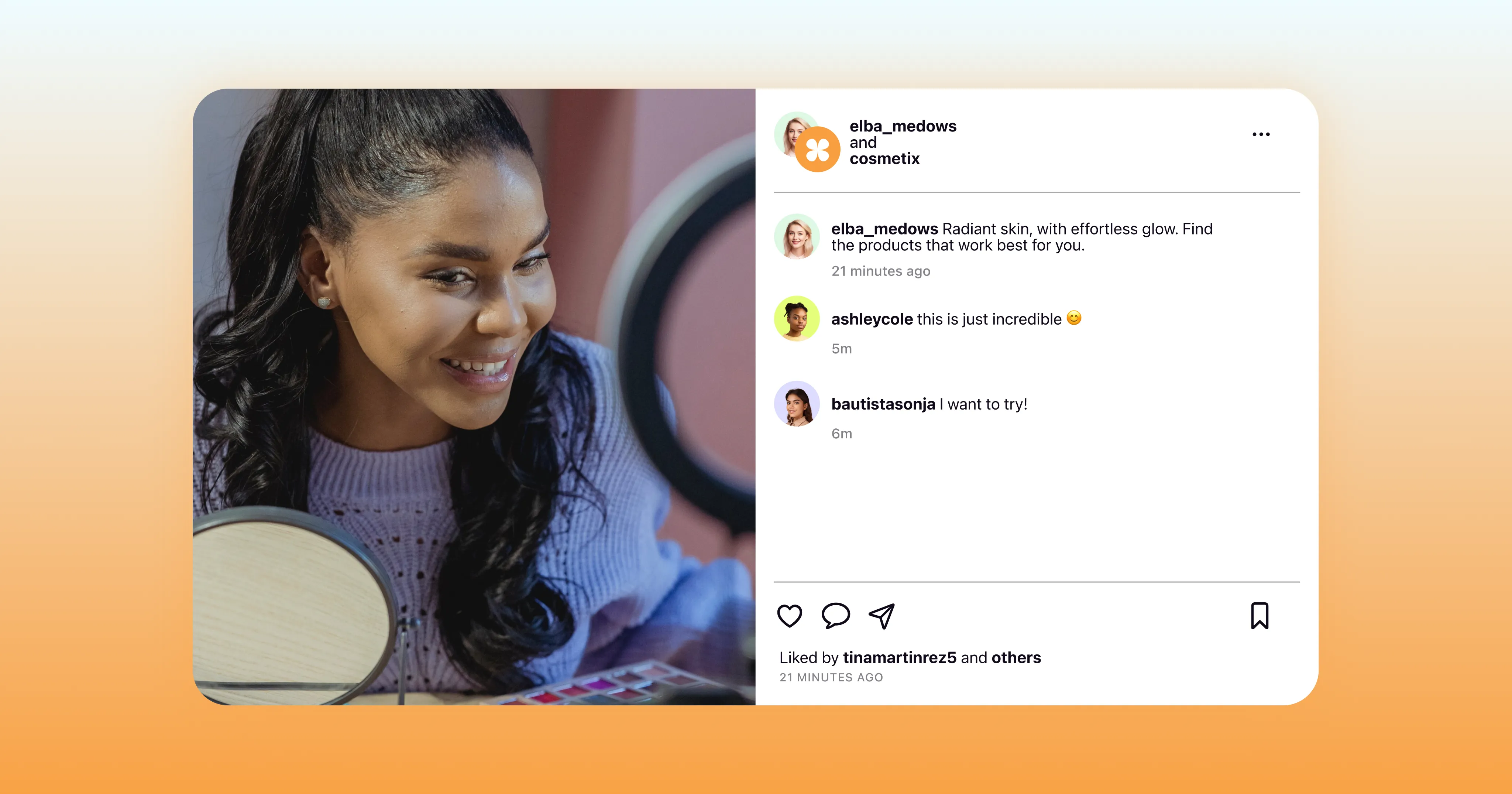
Important tips for your AI UGC strategy
When using AI for UGC, make sure you’re transparent. For AI testimonials, use honest customer reviews as the script and generate dynamic footage around it. That way, you’re sharing authentic commentary with your audience and staying true to customer feedback. If you’re sharing multiple reviews in the same video, you can include something in the intro to clarify that it’s capturing true customer feedback. For example, the script might include a phrase like “according to customer reviews," so your audience knows it’s trustworthy information.
Marketing teams must act fast to stay competitive, and AI makes that possible. Play with different tools and approaches to see how AI UGC best fits into your own marketing strategy.